favordigital
If you’ve ever browsed massage chairs online, you’ve probably seen terms like 2D, 3D and even 4D thrown around. But then there’s this newer kid on the block: vibroacoustic therapy chairs, like the Lifevibe VAT Chair Prime. So, can a vibroacoustic chair actually be considered a 4D massage chair? Let’s unpack this.
Understanding the Basics
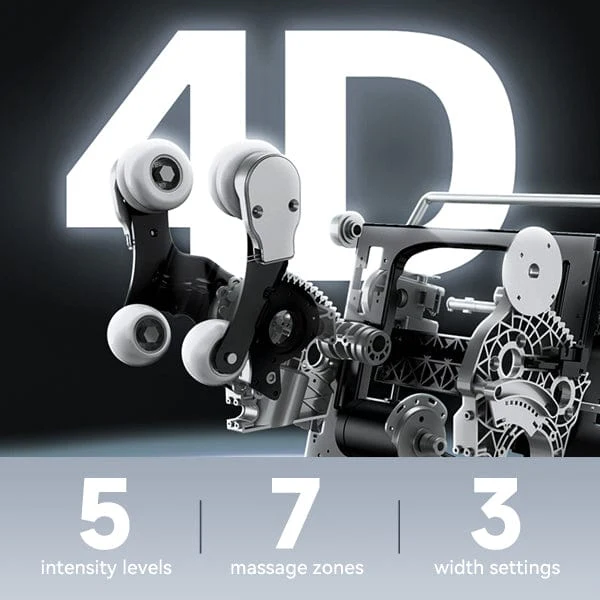
Traditional massage chairs work with rollers that move along your back. In 3D chairs, the rollers can move in and out, adding a depth dimension to the usual up-and-down, side-to-side motion. 4D chairs add a little twist—literally. They adjust speed, rhythm, and even timing, creating a more lifelike, dynamic massage.
2D vs 2D adv vs 3D vs 4D massage chair
Vibroacoustic therapy chairs, on the other hand, bring in something entirely different: sound waves that penetrate deep into your muscles and fascia. These aren’t just superficial vibrations you feel on the skin. Low-frequency sonic waves travel through your body, syncing with the rollers to reach layers that traditional chairs can’t touch.
What is a vibroacoustic therapy chair
Rollers vs. Resonance
A key difference is how the chair works. A 4D massage chair relies on mechanical rollers that change speed and rhythm. A vibroacoustic chair like Lifevibe’s VAT Prime still has 3D rollers for that familiar massage feel, but it pairs them with SonicWave™ transducers. These convert audio signals into gentle, deep vibrations that move through muscles, fascia, and even nerves.

In practice, this means the chair isn’t just pressing on your back. It’s creating an internal wave that your body feels from the inside out. That’s a different type of experience than any 4D chair that only tweaks roller mechanics.
The SonicSync™ Effect
Lifevibe didn’t stop at combining rollers with sonic vibration. Their SonicSync technology synchronizes the roller movement, the sound waves, and massage programs in real time. So when you’re in Sleep Mode or Focus Mode, the chair isn’t just rolling and pressing; it’s creating a rhythm your body can follow, helping your nervous system relax or your mind sharpen.
No 4D chair on the market currently offers this level of body-and-mind integration. The experience is immersive, almost like the chair knows your body’s natural rhythm and flows along with it.
Why It’s Not Really 4D
So, if you’re thinking “sound waves + rollers = 4D,” not quite. 4D massage is still defined by mechanical control—roller depth, speed, timing, and pulse variations. Vibroacoustic therapy chairs add a whole new dimension that’s outside traditional 4D metrics.

In short, vibroacoustic therapy chairs don’t fit neatly into the 4D category. They’re doing something different: combining mechanical massage with therapeutic sound vibrations, targeting muscles and fascia on a deeper, more holistic level.
If your goal is to feel deeper, more internal relaxation, a vibroacoustic therapy chair is in a league of its own. You still get 3D rollers, so the classic massage feel is there—but with a layer of deep, gentle resonance that 4D chairs simply can’t provide.
Think of it this way: 4D chairs focus on how rollers move, vibroacoustic chairs focus on how your body resonates. The result? A massage that doesn’t just touch your muscles—it communicates with them.
Vibroacoustic therapy chairs aren’t just another step up in roller mechanics. They’re a shift in the massage chair experience, bringing in a multi-sensory, full-body resonance that extends beyond what 4D chairs offer. While they might technically fall outside the traditional 4D definition, they give your body a deeper, gentler, and more immersive form of relief that’s hard to match.
So, while a VAT chair isn’t a 4D chair in the classic sense, it’s offering something that could be called the next evolution of massage technology. And honestly? That’s a pretty exciting upgrade for anyone who takes relaxation seriously.